Thanks to each one of you, 2014 was a fabulous blogging year!

Thank you!

Thanks to each one of you, 2014 was a fabulous blogging year!
Thank you!
This is my contribution to the O Canada Blogathon, hosted by Speakeasy and Silver Screenings:
The O Canada Blogathon
A few things to know before we get started:
Although this post is part of the O Canada Blogathon (yay!), this is the first part of a series on Fay Wray that will continue here. Look for more entries over the coming weeks.
Yes, this is a (mostly) literary-themed blog. Fay Wray wrote an excellent autobiography, and was also a playwright. She considered writing her true calling.
As some of you may know, in the real world I also write about old movies and their stars. I’m in the process of creating a companion blog for that pursuit. When it is up, I’ll move the series over there. More on that later.
***
Fay Wray was an exceptionally gifted woman, as any in-depth viewing of her filmography will show. It is my hope that what you read here lights a spark that will start you on a journey of appreciation for (and personal interpretation of) her work.
***
Except for brief mentions, this mini-essay is a King Kong free zone. The big guy gets enough press. (We’ll cover him another day, anyway.)
***
A Brief Introduction: Some Random Thoughts on Fay Wray
Fay Wray was, in many ways, an ideal textbook movie star. Possessed of an unusual, immediately recognizable beauty, slim and elegant, she looked magnificent in any article of clothing. She exuded warmth, humor, and intelligence in every role. Her versatility was the kind that warmed the cockles of otherwise jaded movie executives’ hearts. As a leading lady who worked and excelled in multiple genres, she brought believability to her on-screen romances opposite a variety of actors. She was the first true scream queen, but, King Kong (1933) notwithstanding, she usually conveyed terror through her exceptionally expressive face or beautifully controlled gestures. In other words: girl could act. Oh, could she act!
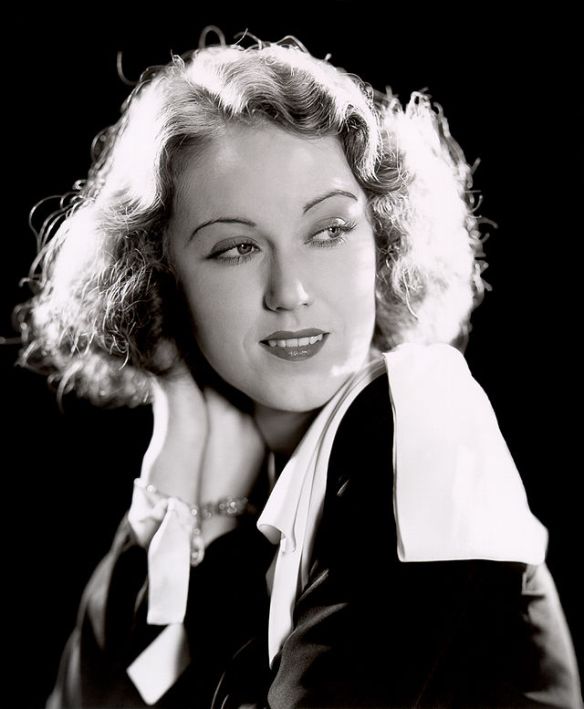
Fay Wray: Looking every inch the glamorous movie star.
She maintained her grounding presence even amidst the most absurd or fantastical plot twist. This ability to always seem realistically human was, perhaps, her greatest strength. Fay was not an artificially mannered actress; she did not have an arsenal, or even a pocketbook, full of rote gestures or winsome glances to which she defaulted when it was convenient. Naturalness, like comedy, takes great skill. Oh, and Fay did that well, too.
From her early days doing Hal Roach shorts in the 1920s to the strange horror films that marked much of her career in the next decade, her characters are, almost to a woman, ladies of exceptional wit, quick with a pithy lob or sly retort; funny, but never caricatures of a funny woman. Where the humor is not overt, one senses it living just below the surface. Whether imperiled in a jungle or lounging in the luxury of a drawing-room, her heroines are never humourless or dry.
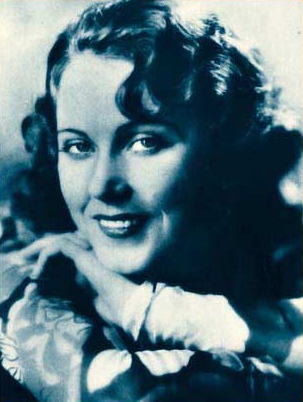
Stars of the Photoplay, 1930: a cheery Fay Wray.
The first two decades of Fay Wray’s genre-bending career would take her down unique and eccentric professional paths that only she could navigate with such assurance and success. How? Never fear! A Beginner’s Guide to Fay Wray will attempt to answer that question.
For now, let’s recap:
Fay brought a long list of superlatives to the screen. She was smart, elegant, witty, natural, unaffected, beautiful, stylish, and versatile. She always delivered what was required, and more, to excellent effect. As a performer, she was present in the role, the scene, the fictional world. Why, then, after a relatively long and successful career, does her star not shine higher in the Classic Hollywood sky? No, the enduring cult status of King Kong is not solely to blame. Fay lacks the incessant punches-you-in-the-face singularity that most currently revered actresses from the era had, or, more aptly put, that we, as modern viewers, insist on reducing them to, however unfairly. Her serial adaptability in mostly B films resists our obsession with pigeon-holing. She is not relentlessly mysterious (Garbo), disturbingly sexual (Dietrich), bawdy (West), brassy (Harlow), or haughty (Hepburn). She is some of those things some of the time, but none of them always. Whatever type she played, she played so well that it ceased to be a type at all.
She did her job too well.
In a Beginner’s Guide to Fay Wray, we’ll discuss how her quiet, under-appreciated realism made the filmscape of the 1920s-1940s a better, slightly more magical place.
Next up: Three of Fay Wray’s most likable onscreen couplings, and the films that created them.
Canadian Pedigree: Fay Wray was born in Cardston, Alberta, Canada on 15 September 1907 to an American mother and an English father. Fay was three years old when her family packed up and moved across the border to the United States. She was always proud to have been born Canadian.
You can read, read all about it in On the Other Hand, her fabulous autobiography.
I’ll be writing about the lovely Fay Wray.
A Small Press Life is being hit hard by spambots this week (99% of which is caught by the spam filter, fortunately). These are my 3 faves from today, and my responses to them:
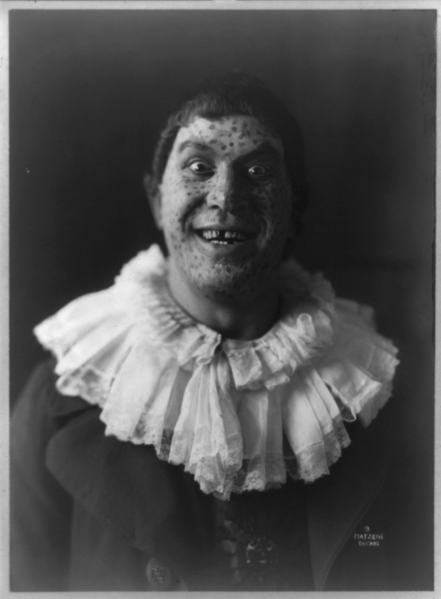
Is that you, Spambot? (It’s actually opera singer Titta Ruffo, dressed up as a clown. Circa 1913.)
I’m featured on this week’s Life in 6 Songs! It’s a wonderful, fun, and enlightening series. Do check it out if you have the time.
Do I believe in the concept of best friends? Of course I do! See below:
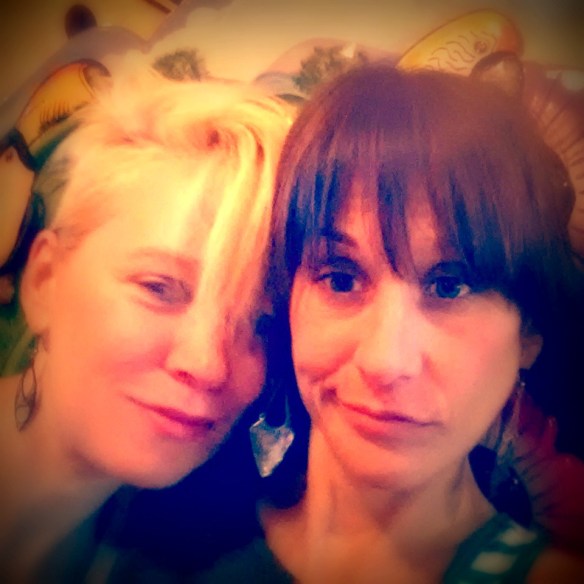
Al and Nic: Goofing off.
We’re 98% the same person. She’s my best friend, my sister from another mother, my platonic other half. Nic is one of the handful of things that makes life precious, and worth living.
“Promise me you’ll always remember: You’re braver than you believe, and stronger than you seem, and smarter than you think.”-A.A. Milne
This is my close friend Kevin’s new blog. He’s also a contributor here on A Small Press Life. It would be awesome if you’d show him some love by visiting his new site. Thanks!
For anybody new and curious about Legends of Steragos , welcome! Pull up a chair , lemme talk atcha. Allow me to give you the skinny about LOS.
LOS is a book series , which is a bit difficult to say since the series currently consists of one book. However , I’m working on the second one currently , aiming for a September release. By the looks of things , it’s shaping up to be a humdinger. There’ll be a snow goddess, a train crash, bandits, dangerous quests, a venture into an otherworldly realm, and one character even uses an intercom!
I like intercoms. That’s … that’s why that’s there. I like ‘em.
The stories of LoS take place in the enchanted realm of Steragos, during the technological revolution of that world’s 1920s, and center around three heroic princesses – Zariah, the stalwart leader and future queen of the land…
View original post 366 more words
This is my contribution to the Great Villain Blogathon. Disclaimer: I’ve been disgustingly sick for a week, and this is the best I could do. Oh, and spoilers! There are [a few] slight spoilers!
“Sometimes the truth is wicked.”
The world would be an easier place to navigate if all toxic substances were marked with a skull and crossbones. Unfortunately, some poisons shimmy through the cracks and enter polite society unnoticed or unheeded. There are few things deadlier or more intriguing to citizens at large, than evil wrapped in a pleasing package. From real life to pop culture: Oh, how we love good-looking villains!
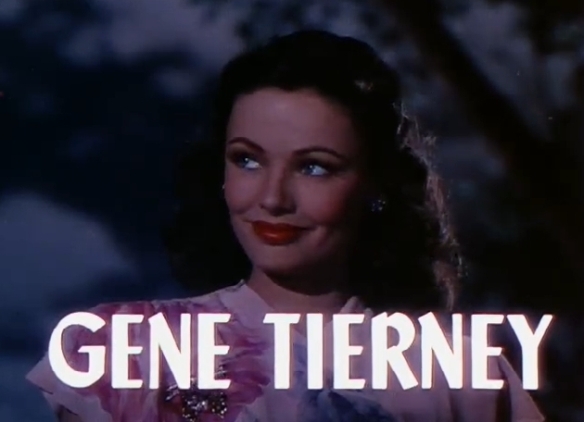
Gene Tierney is at her finest as Ellen.
The film universe of the 1940s is full of swanky dames and femmes fatales, duplicitous creatures out for revenge or a fast buck. They seem to inhabit one vast, inescapable hellscape: smoky, urban, gritty, and ruthlessly relentless. There are no winners, only: comers, takers, makers. Leave Her to Heaven’s Ellen Berent Harland (Gene Tierney) is a rule-breaker, a curious abstainer from the decade’s expected bad-girl protocol. She is neither noir cookie nor hard-hearted moll, but something infinitely more frightening: charming, civilized, and unstoppably obsessed. Her love, bleeding out, cannot be stanched.
Ellen’s milieu, too, is different. She carves a path of cunning and destruction through some of the loveliest natural backdrops on film this side of Westerns. It’s a Technicolor world, full of towering pines, deeply blue lakes, and handsome mountains surrounded by sunshine and clean air. Beauty kills as well as the beast. Continue reading
I do not celebrate Valentine’s Day, but I wanted to give a shout out to all of my dear readers! You consistently show this blog (and its humble creator) so much love that I could not possibly let the 14th of February evaporate without some kind of acknowledgment. This is for you:
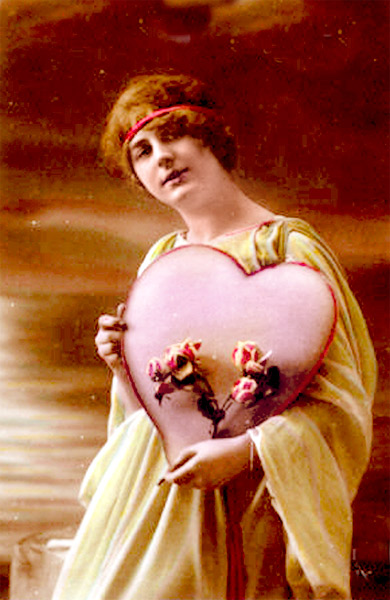
Valentine’s Day Image, circa 1910.
When I was fifteen, I learned the truth behind Norma Desmond’s famous Sunset Boulevard assertion: “We didn’t need dialogue. We had faces!” Six decades of repetition has eroded this cutting indictment to a fragment of its original self, denuded of meaning even as it has become a pithy pop-culture sound bite that the least film savvy person can repeat with cocksure swagger. My enlightenment came in the form of a dusty, jacket free old book crammed with its fellows on a shelf at the public library. Subject: silent movie star portraiture. Impact: sudden, immense, striking. A well-established love of the arts, history, and old movies hadn’t prepared me for what I found in this neglected volume of photography. Questions rushed my senses: Who were these women and men? Why was their beauty sung not to the heavens but inarticulately whispered of in a suburban teenager’s bedroom? What happened to them? When did mystery and imagination leave entertainment photography, resulting in the garish, empty images that had engulfed my recent 1980s childhood?
TWO OF MY EARLY FAVOURITES:
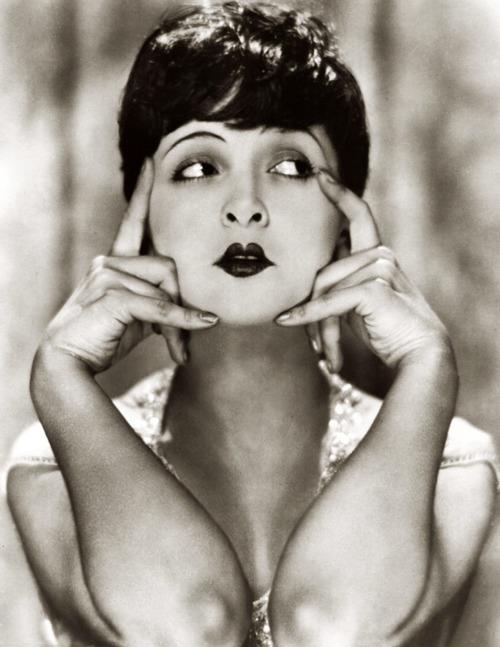
Lya De Putti, whose movie career started in 1918.

Valeska Suratt by Orval Hixon, 1916. Her brief bid for silent screen stardom ended in 1917.
The trajectory of my life changed the day I checked out that book. A passion for old movies expanded to include silent films. I watched as many as I could find, and read everything available on the subject in our large library system. Result: hooked, permanently. Bonus: growing up to write about what I love, including silent movie culture.
Amidst the flavors of the day and luckless publicity seekers, the stars whose fame flamed into the sky with the spark and longevity of an uncontrollable firecracker, and those with fleshy charms but little talent, there stood performers with skill, magnetism, and dedication to a craft that was being forged as the cameras rolled. Some are remembered-if only for the persistence of their images in twenty-first century advertising-but most are forgotten, their work rarely seen by the modern masses. In a world where Mary Pickford has been reduced to the curve of her curls and Lillian Gish to her shy, arcane smile, where Charlie Chaplin is nothing but the sum of the sartorial trio of hat, cane, and shoes, what chance does Mabel Normand stand to be recognized and appreciated as a first-class artist? Even her lovely face is a fading footnote. Continue reading

 A Small Press Life: Books. Art. Writing. Life. Tea.