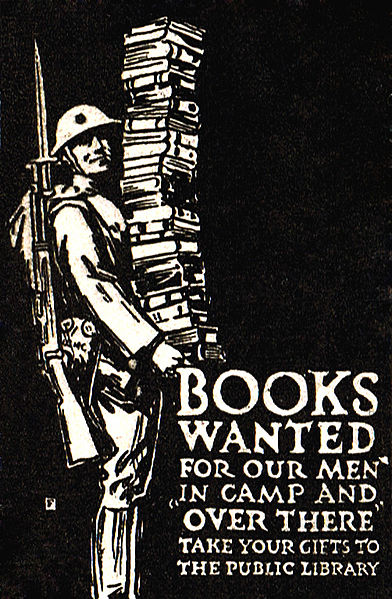
Books Wanted, Harper’s Monthly Magazine cover, December 1918
Books Wanted, Harper’s Monthly Magazine cover, December 1918
What happens when two of my favourite things, zombies and the Edwardian era, are combined? This:

The New Deadwardians
I could not resist.
Anton Chekhov was born on 29 January 1860. In addition to being quite the looker…
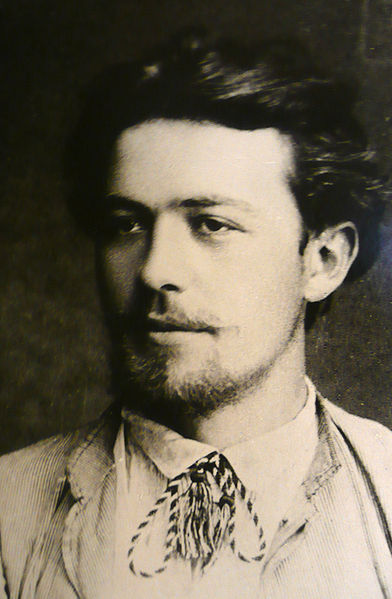
Anton Chekhov, 1889
…he ranks as one of my favourite writers.
QUOTE: “There is nothing new in art except talent.”
SOME WORKS: The Bear; The Seagull; Uncle Vanya; Three Sisters; The Cherry Orchard; The Death of a Government Clerk; The Huntsman; At the Mill; Easter Eve; Grisha; The Bet; The Darling; The Bishop.
A KEEPSAKE:
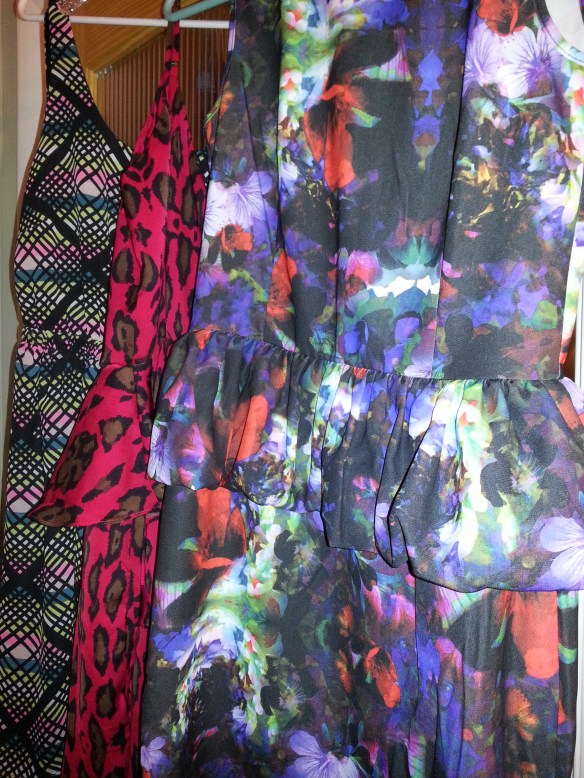
Too Many Choices
I made this “poster” from an excerpt of one of my essays. It was fun! If you want to make a quote poster of your own, go to Recite This. A big thank you goes to Gala Darling for introducing me to this site.
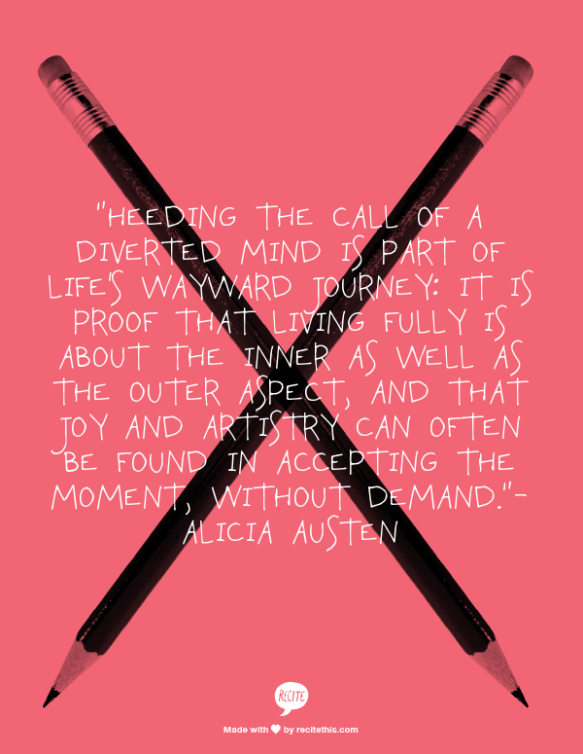
A quote from one of my essays.
10 Famous Writers on How to Read [courtesy of Flavorwire]
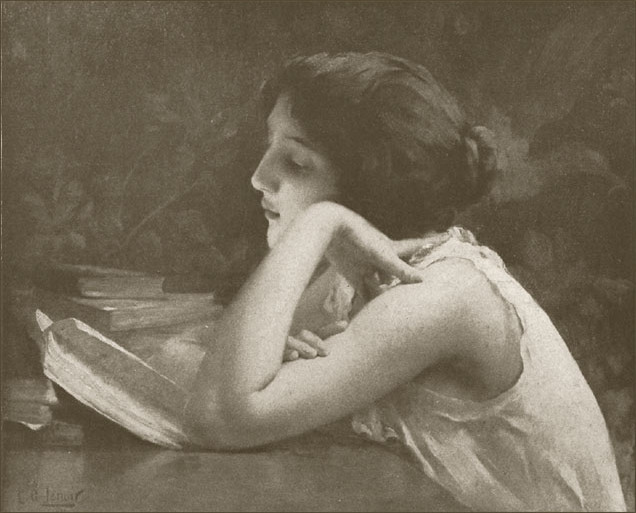
The Novel by Charles-Amable Lenoir
I’d like to think that I’m a relaxed, purposeful, and serene-looking reader, a leisurely woman out of a nineteenth-century painting. Cushioned in velvet and satin, a pile of books, a pot of tea, and a vase of flowers artfully arranged on an elegantly draped table near-to-hand. Like this, more or less:

Louise Tiffany Reading by Louis Comfort Tiffany, 1888
My delusions are so humble, aren’t they? The reality is a bit different. Okay, considerably different. For starters, it involves backaches and too much dog hair. I live in a sea of language, a blizzard of words. If I’m not writing, I’m reading. The former is done at the desk in my studio with neatness, solitude, and organization. The latter is a haphazard affair. I hunker down with a book or three in, on, or beside whatever can pass for a seat: my swinging sixties swivel chair; the bathtub; my too-lumpy bed; on the dining room floor; or, somewhat claustrophobically, on the couch crushed beneath a pile of scratchy dog paws and icy snouts. My solution? A dedicated reading space, of course!
We’ve been in our huge flat for 2 1/2 years, and my studio has been used as such from the get-go. Why am I so late to the party with this? I’ve always been a wallflower but this, this, is ridiculous. I spend far too much time on Pinterest to be ignorant of or immune to the sweet siren call of The Perfectly Curated Reading Nook. The concept makes my heart sing with girlish enthusiasm. The effort required to make this over-the-top idea come true? Not so much. In fact, it makes me think of this:

My girl Ophelia knows how I feel.
What’s a writer-reader with bohemian taste, an absurd imagination, and lazy tendencies to do in lieu of actual work? Drag an old chair that has been in the family for 40+ years to the middle of her studio and call it a day.
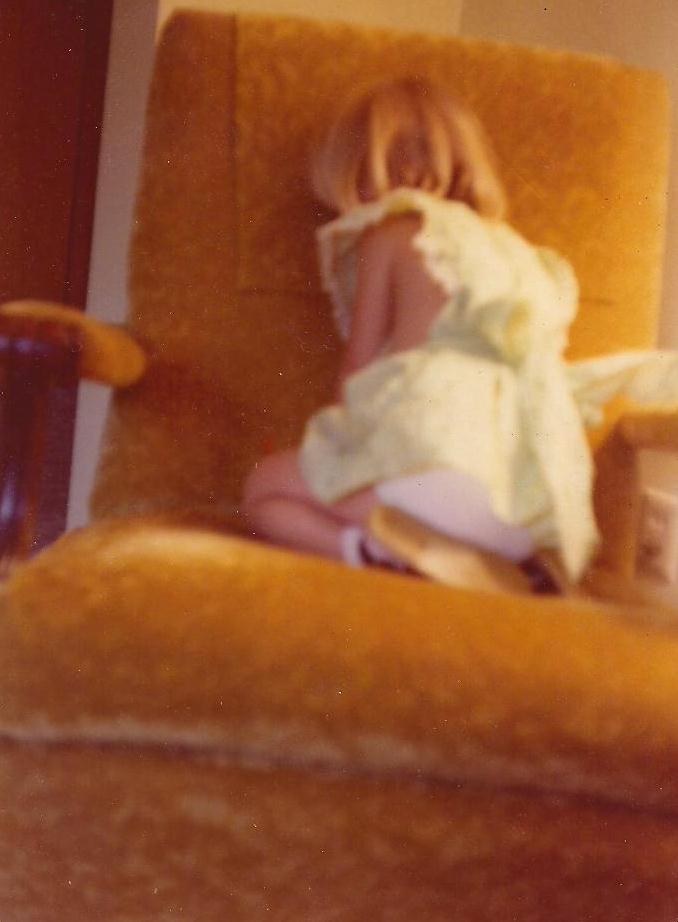
Before: Communing with the chair in the late 1970s.
The Gold Chair is older than I am. It’s now missing a few buttons and is slightly threadbare in spots; it reminds me of a passage in The Velveteen Rabbit (or How Toys Become Real) by Margery Williams: Continue reading
Figuring out my audience while writing a young reader’s book.
#4
You know, I would’ve thought that the spirit-crushing doubt that one experiences while stitching up their monster of a writing project was the worst part of the creative ordeal. Turns out I was wrong. The trepidation that kicks in after you finish the first draft can be just as daunting.
Ever hurt yourself in one of those “Ssssssssssssst-OOH!!” kind of ways? Like, you’re shaving a part of your body that you can’t see all that well with a cheap “safety” razor, and then you zig when you should have maintained a nice, smooth, even zag? You hear that “KRTCH!!” of flesh being ripped open, that uncomfortably familiar feeling of something viscous and sticky running from some intimately internal place, and the reality-boggling pain of having shredded the skin off of an inconceivably tender area? If you haven’t, stop reading and go do it, and then you’ll know what I mean.
Arright, so now, you’re in this amazing amount of pain, and you know you’re bleeding. But do you look at it right away? Logically, you would – but there are many of those in this world [me] who would pause before taking a look at his handiwork. There’s something about not looking at the thing that somehow puts off the magnitude of what happened. If I don’t see it, it’s not as bad as it feels. Out of sight, somewhat out of mind.
Right now, I’ve put my story out of sight. I finished the first draft of The Princess Project one week ago (28 October), and I haven’t really looked back since. There’s something mildly unpleasant about reviewing the work I’ve done, as if doing so would show just how truly incompetent I am with the written word. You would think that not glancing back at the finished draft would be a comforting thing, but no – it really only serves to ramp up my sense of dread about what I’ll find when I double-click the file once more.
The theme of this post was going to be doubt, but I find there’s plenty of that to write about here just by thinking about what I wrote. The fear that I will inevitably be razzed for anything I put down is a powerful one, and it works on my whether I’m actually writing or not. I gotta find a way to get over it, to surmount this dread and move forward. It’s really not helping me meet my deadline at all.
KM Scott is an aspiring writer currently teaching English in South Korea. He is currently sweating over a young-reader’s book, the development of which he chronicles in this blog. Pray for him!
Figuring out my audience while writing a young reader’s book.
#3
I’ve always felt that my writing process was akin to the evolution of living species on planet Earth: It is crushingly slow and a lot of things develop that are going to prove unnecessary to the success of the end product, kind of like having a second appendix. One of the things that causes me to drag my feet when getting something down on paper is the “incubation period”, the length of time that I let an idea marinate in my mind before trying to manifest it somehow.
This is where I heavily contemplate detailed elements of the idea, from character quirks to the history of the world the story is set in (the term “thorough daydreaming” would work as a good shorthand, except it’s longer). Normally I’m content to do this to a certain degree, so long as I’m actually producing something. Usually though, the truth is that the incubation period is criminally long in comparison to the production period. It is far easier to think about the story than actually work on it.
However, with this Princess Project that I’m working on, I haven’t allowed myself the luxury of time. I’ve a deadline now, and need to meet it if I’m going to reach my personal goals, not just as a writer, but as a teacher who wants to give his students a gift. That’s not to say that I haven’t gone whole days without writing a darn thing, but nonetheless, the level of dedication I feel that I’m supposed to have is admirable.
Having to work without an extended cooking time is an interesting [frustrating] experience. In truth, I’d come up with the idea several months ago, and so had plenty of time to think casually about the characters, technology, setting, et cetera. This, I found, was the easier part of the story to write. Those parts of the story that I hadn’t already envisioned were pretty easy to make up on the spot. From a technical standpoint, the writing wasn’t a problem.
The voice of the story, on the other hand, was another matter (I’m writing in the past tense here because I’ve finally gotten the first draft done HALLELUJAH). What I mean here is, what techniques should I use to tell the story? Should I use narrative tricks, employ ambiguity to inspire the imagination, be explicit in the detail of the narrative? What kind of language should I use? I mean, my main characters are royal princesses. Keeping my inscrutable audience of young readers (8-14, I guess) in mind, should I write down to what I would have to assume is their level, or should the ladies speak with a learned, scholarly, regal vocabulary?
And how do they speak to each other? The protagonists can be described as Z, the Leader, Ayomi, the Adventurous One, and Ballista, the Smart One Who Shoots Things. There are several different creative avenues to explore here. Should Z be pedantic and virtuous, as Leader heroines are often depicted as, or should she be sly and forward thinking? How exactly do I present Ballista as both a reserved bookworm and wisecracking action heroine at the same time? Does she actually crack wise, or does she make simple, somewhat philosophical statements that turn out to be witty one-liners when one sits and thinks about them?
There are two challenges here. First, I have to get the voices of the characters straight. I know who they are (roughly), I just need to develop how they sound. Second, I have to bring those voices together in harmony; establish how they contrast with each other, bounce ideas between each other, and finish each other’s sentences. In short, they need to become an old married couple (in an all-female, polygamous relationship way).
I find myself missing the incubation period. This would have been spent composing the music of the characters interaction. Sure, it would have taken a ridiculous amount of time, but I would’ve felt more comfortable going into the project. And yet, maybe comfort is not what I need here. Maybe I need to be a bit on edge here, unfettered by any sense of security, in order to challenge my limits and get my best work. This could be a perfect opportunity to train my brain to produce more over a far shorter period of time, which would be an excellent talent to bring into writing for television. Indeed, come to think of it, comfort only delays my desire to create.
I sure liked having it, though.
Next time: DOUBT.

 A Small Press Life: Books. Art. Writing. Life. Tea.