DAY 48:
DAY 48:
DAY 33:
I wrote this essay for the podcast I co-host. If you would like to listen to me read it, please follow this link.
This is a story of juxtaposition, not judgment—of presentation, not character. This story is not about tattoos, piercings, or other modifications, nor does it concern itself with plastic surgery, Botox, hair, makeup, or clothes. What I am talking about is skin, human skin. Aging human skin.
Aging human skin is not shameful. It is not a punishment. It is not an albatross hanging off of our increasingly wrinkled necks.
We live with our faces; we live in our bodies.
Aging is an action.
That is normal, that is healthy. Skin is not decorous; it is a hard-working, highly-functioning organ. It will eventually crease.
As long as we live, we age. This is an inescapable fact of existence.
We lament the aging process when what we should be lamenting is that women are not allowed to look like they age. How unkind, unrealistic, and misguided.
****
Aging is a study of shifting perspectives. We are not meant to look 20, or 35, or 60, forever. The use of apps, Photoshop, and filters has us believing otherwise.
Social media hypnotizes us with its ubiquity and lulls us into accepting its rapidly changing aesthetic standards as our long-held collective reality. We gasp in protest—maybe—then pretend that all is normal. That things were always this way, or, at least, should be this way. But this is not Shangri-La. No matter how much we filter ourselves further from reality, we will still wake up inhabiting our skin, wrinkles, and all.
While scrolling through Instagram recently, I saw two magazine covers in my feed. Back-to-back. They were for different iconic publications. Image number one featured a fifty-something entertainer. Technically, she looked fantastic but, upon second glance, was blatantly Photoshopped into some weird non-human fantasy realm where imperfection does not exist. Her skin was a glossy mask—entirely free of wrinkles, pores, and blemishes. This, it must be said and said forcefully, is not even a beauty or fashion periodical but a widely read general interest weekly. In one of the most bizarre hazards of modern life, we are forgetting what real skin looks like. We’ve already lived in this “new” normal long enough that we do not always instantly recognize what is happening. For younger people, there is scarcely a before to ponder. Social media is full of teens and twenty-somethings bemoaning the state of their skin. The most vocalized issue is the appearance of any texture. What they see in the mirror differs radically from the artificiality promoted on apps.
We are trying our damnedest to meet standards that do not exist away from our screens. How quickly we have been duped into thinking that filtered images are in any way true to how people look.
Image number two was a different matter. Vogue Italia. October 2023. Isabella Rossellini, photographed by Zhong Lin, with every wrinkle intact. 71 years old and as arresting as a Renaissance painting. Owning her age. Powerful. Forceful. Beautiful. Vulnerable. Unapologetic. But I do not need to tell you how to feel. Much like when confronting the individuality of impasto on a portrait, you will be moved by your own emotions.
Isabella wrote on her Instagram page that she felt “some trepidation” in sharing this un-retouched photo on the world stage. A move so bold is likely the result of years of grappling with the subject and of living as a woman growing older under an unrelentingly bright spotlight.
Ultimately, this is not about beautiful people aging beautifully. It goes deeper to the core of what it means to continue existing VISIBLY in a world that thinks you should disappear from relevance because you have the guts to be comfortable in your wrinkled skin.
Age does not need to be retouched, warped, or annihilated to be accepted. It can just be.
Important stuff. Good stuff. Necessary stuff.
WHEN FEMALE ARTISTS STOP BEING SEEN AS MUSES [THE PARIS REVIEW]
The Miriam Hopkins Blogathon, which I co-hosted with Ruth of Silver Screenings, was a roaring success! If you’d like to learn more about this fabulous actress or her films, please follow the links to the daily post round-ups.
As many of you know, the blogathon coincided with the official launch of my new blog, Font and Frock. Our review of Miriam’s film Design for Living is a great introduction to the blog’s eccentric concept. Each film we review will be done in the same, four-part manner. One classic film=four segments, covering film, fashion, flash fiction, and feminism. Check out the links below to see it in action.
Design for Living: Part One-There’s Just Something About Miriam
Design for Living: Part Two-Gilda’s Tips for Dressing Like a Successful Commercial Artist
Design for Living: Part Three-“To Let: One Cheap, Roomy, Salubrious Flat”
Design for Living: Part Four-Not Your Average Rom Com Heroine
Thank you!
A totally unexpected, early Christmas gift from The Chef:

The Secret History of Wonder Woman by Jill Lepore
Today my muses are spread so far across the map that there really is no map. Yay for eclectic inspiration. Enjoy!
I cannot get enough of John Grant’s new song, Pale Green Ghosts. It is the soundtrack for my packed writing weekend.


Crystal Eastman was a noted anti-militarist, who helped found the Women’s International League for Peace and Freedom. (Photo credit: Wikipedia)
My mom sent me this reproduction postcard from England. The original is from c1910.
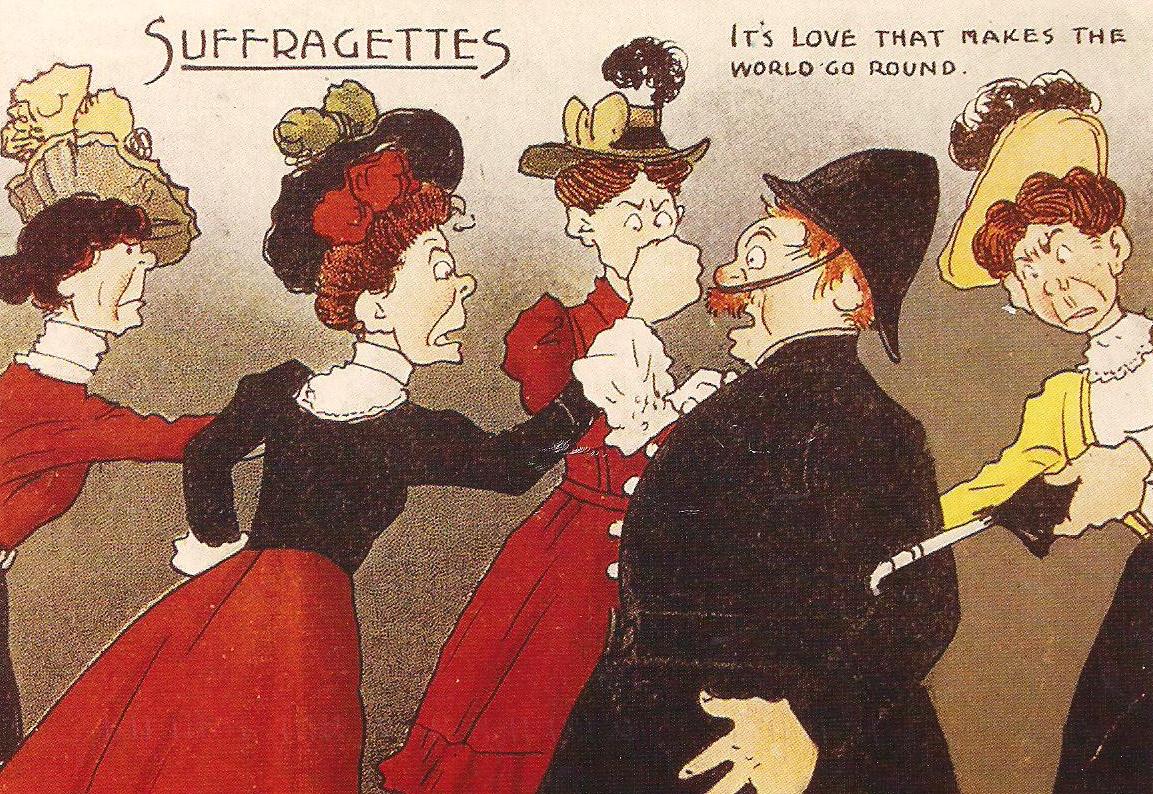
The text on the reverse side reads: The suffragette movement swung into action with police and hardy women coming face to face.
“Coolest f-word ever deserves a fucking shout! I mean, why can’t all decent men and women call themselves feminists? Out of respect for those who fought for this.”-Ani DiFranco
 A Small Press Life: Books. Art. Writing. Life. Tea.