I’m not a fan of actor Robert Wagner, but his book I Loved Her in the Movies: Memories of Hollywood’s Legendary Actresses (written with Scott Eyman) is fun and entertaining. It’s good lazy day reading.
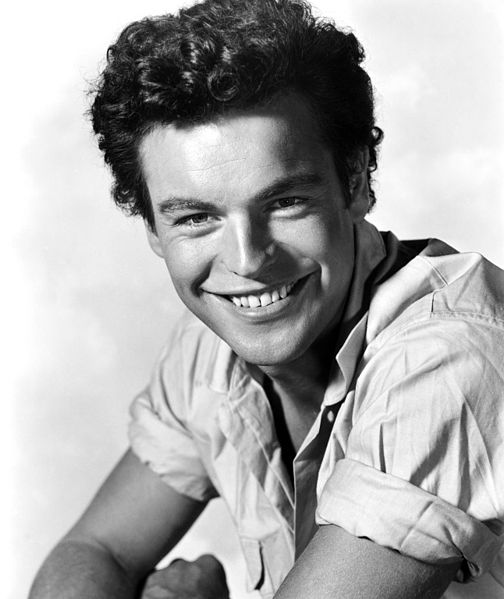
Robert Wagner in Beneath the 12-Mile Reef, 1953

I’m not a fan of actor Robert Wagner, but his book I Loved Her in the Movies: Memories of Hollywood’s Legendary Actresses (written with Scott Eyman) is fun and entertaining. It’s good lazy day reading.
Robert Wagner in Beneath the 12-Mile Reef, 1953
This is my contribution to the O Canada Blogathon, hosted by Speakeasy and Silver Screenings:
The O Canada Blogathon
A few things to know before we get started:
Although this post is part of the O Canada Blogathon (yay!), this is the first part of a series on Fay Wray that will continue here. Look for more entries over the coming weeks.
Yes, this is a (mostly) literary-themed blog. Fay Wray wrote an excellent autobiography, and was also a playwright. She considered writing her true calling.
As some of you may know, in the real world I also write about old movies and their stars. I’m in the process of creating a companion blog for that pursuit. When it is up, I’ll move the series over there. More on that later.
***
Fay Wray was an exceptionally gifted woman, as any in-depth viewing of her filmography will show. It is my hope that what you read here lights a spark that will start you on a journey of appreciation for (and personal interpretation of) her work.
***
Except for brief mentions, this mini-essay is a King Kong free zone. The big guy gets enough press. (We’ll cover him another day, anyway.)
***
A Brief Introduction: Some Random Thoughts on Fay Wray
Fay Wray was, in many ways, an ideal textbook movie star. Possessed of an unusual, immediately recognizable beauty, slim and elegant, she looked magnificent in any article of clothing. She exuded warmth, humor, and intelligence in every role. Her versatility was the kind that warmed the cockles of otherwise jaded movie executives’ hearts. As a leading lady who worked and excelled in multiple genres, she brought believability to her on-screen romances opposite a variety of actors. She was the first true scream queen, but, King Kong (1933) notwithstanding, she usually conveyed terror through her exceptionally expressive face or beautifully controlled gestures. In other words: girl could act. Oh, could she act!
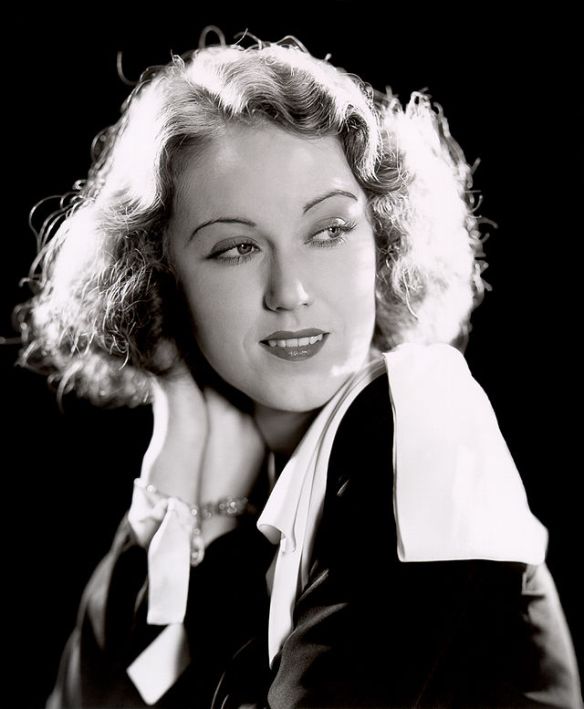
Fay Wray: Looking every inch the glamorous movie star.
She maintained her grounding presence even amidst the most absurd or fantastical plot twist. This ability to always seem realistically human was, perhaps, her greatest strength. Fay was not an artificially mannered actress; she did not have an arsenal, or even a pocketbook, full of rote gestures or winsome glances to which she defaulted when it was convenient. Naturalness, like comedy, takes great skill. Oh, and Fay did that well, too.
From her early days doing Hal Roach shorts in the 1920s to the strange horror films that marked much of her career in the next decade, her characters are, almost to a woman, ladies of exceptional wit, quick with a pithy lob or sly retort; funny, but never caricatures of a funny woman. Where the humor is not overt, one senses it living just below the surface. Whether imperiled in a jungle or lounging in the luxury of a drawing-room, her heroines are never humourless or dry.
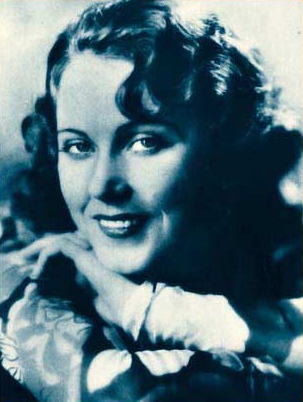
Stars of the Photoplay, 1930: a cheery Fay Wray.
The first two decades of Fay Wray’s genre-bending career would take her down unique and eccentric professional paths that only she could navigate with such assurance and success. How? Never fear! A Beginner’s Guide to Fay Wray will attempt to answer that question.
For now, let’s recap:
Fay brought a long list of superlatives to the screen. She was smart, elegant, witty, natural, unaffected, beautiful, stylish, and versatile. She always delivered what was required, and more, to excellent effect. As a performer, she was present in the role, the scene, the fictional world. Why, then, after a relatively long and successful career, does her star not shine higher in the Classic Hollywood sky? No, the enduring cult status of King Kong is not solely to blame. Fay lacks the incessant punches-you-in-the-face singularity that most currently revered actresses from the era had, or, more aptly put, that we, as modern viewers, insist on reducing them to, however unfairly. Her serial adaptability in mostly B films resists our obsession with pigeon-holing. She is not relentlessly mysterious (Garbo), disturbingly sexual (Dietrich), bawdy (West), brassy (Harlow), or haughty (Hepburn). She is some of those things some of the time, but none of them always. Whatever type she played, she played so well that it ceased to be a type at all.
She did her job too well.
In a Beginner’s Guide to Fay Wray, we’ll discuss how her quiet, under-appreciated realism made the filmscape of the 1920s-1940s a better, slightly more magical place.
Next up: Three of Fay Wray’s most likable onscreen couplings, and the films that created them.
Canadian Pedigree: Fay Wray was born in Cardston, Alberta, Canada on 15 September 1907 to an American mother and an English father. Fay was three years old when her family packed up and moved across the border to the United States. She was always proud to have been born Canadian.
You can read, read all about it in On the Other Hand, her fabulous autobiography.
…would be a shame!
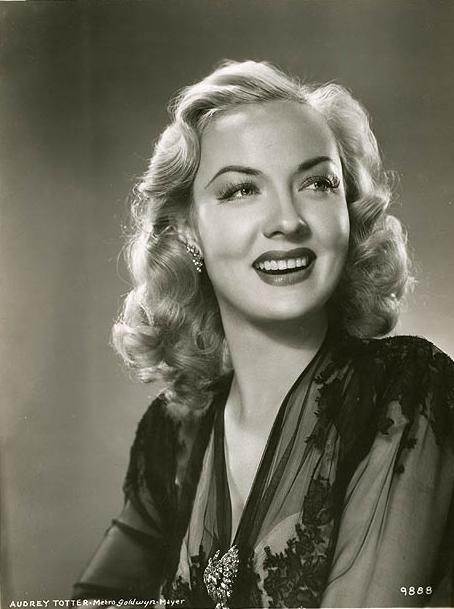
Audrey Totter: December 20, 1917-December 12, 2013

Lady in the Lake (1947)
Vivien Leigh was born Vivian Mary Hartley on 5 November 1913.

Young Viv
She was a very, very fine actress of stage and screen. If you’ve only seen Gone with the Wind or A Streetcar Named Desire, you have missed some wonderful film performances. Her theatrical work has, of course, been lost to time. It’s a shame, because she was a serious and brilliant stage actress obsessively dedicated to her craft. Her film stardom was largely beside the point.-“I’m not a film star, I am an actress. Being a film star is such a false life, lived for fake values and for publicity.”-Vivien Leigh
She was married to this chap for two decades.
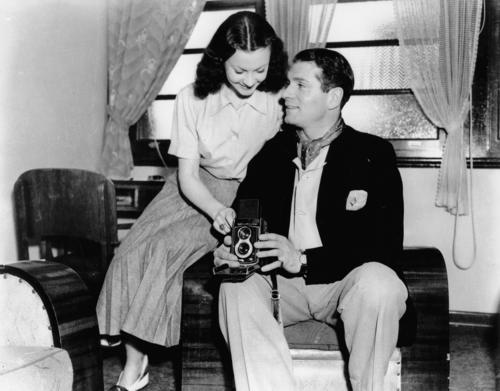
Vivien Leigh and Laurence Olivier, June 1948
She died on 8 July 1967.
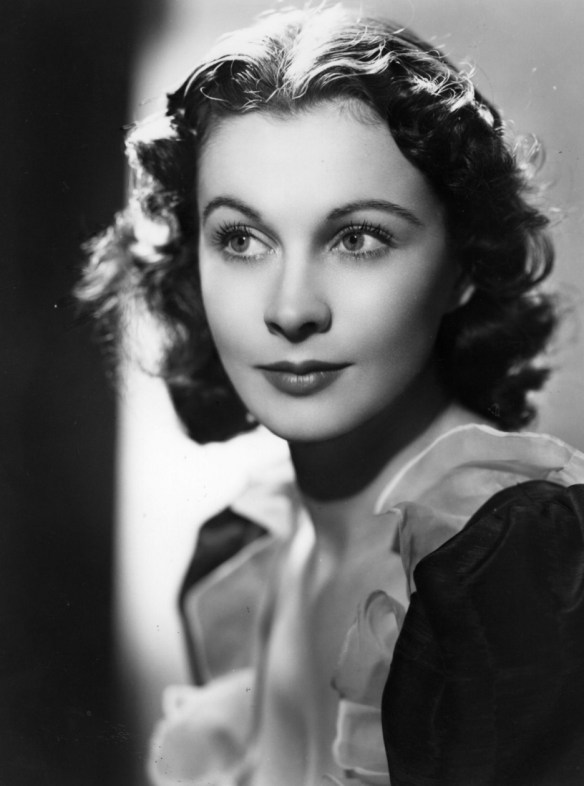
Vivien Leigh
If I ever find a time machine, I will make dozens of stops just to see the magnetic and fiercely talented Vivien Leigh weave her magic across the world’s stages.

Publicity photo of Mae Marsh from Stars of the Photoplay (Photo credit: Wikipedia)

Cropped screenshot of Carole Lombard from the trailer for the film Nothing Sacred (Photo credit: Wikipedia)
 A Small Press Life: Books. Art. Writing. Life. Tea.