Things Your Autopsy Report Should Not Say

And now, in the interest of public service, we present:

  • Played chicken with asteroid
  • Failed Lord Vader for the last time
  • Wasn’t able to tell the difference between H2O and gunpowder
  • Successfully fulfilled lifelong quest to unearth Dracula
  • Brought knife to gunfight
  • Piano juggling accident
  • Embarrassment
  • “But that’s Roger Whitaker’s grilled cheese sandwich!”
  • Accepted request by scorpion to escort him to other side of river on back
  • Struck by barrel thrown by enraged gorilla
  • Marital catapult mishap


Things Your Autopsy Report Should Not Say

And now, in the interest of public service, we present:

  • Accidentally shot out of cannon
  • Overdosed on pillows
  • Backed over self with car
  • Heavily armed, highly unstable mime
  • Questioned religious doctrine of Kirk Cameron to his face
  • A little hard work did, in fact, kill you
  • Carnivorous gerbil
  • Visited exploding cousin
  • Caught between Inky and Clyde
  • Set on fire by very confused protesting monk
  • Proud winner of kerosene-drinking contest

A Year in Books/Day 97: The Dictionary of Disagreeable English

  • Title: The Dictionary of Disagreeable English A Curmudgeon’s Compendium of Excruciatingly Correct Grammar
  • Author: Robert Hartwell Fiske
  • Year Published: 2005 (Writer’s Digest Books)
  • Year Purchased: 2005
  • Source: Writer’s Digest Book Club
  • About: I love this book. I know what you are thinking! “I know how to spell. I do not confuse or misuse words.” Neither do I. Even if your English is already agreeable, it is a great reference tool. It reminds you that linguistic sloppiness is never okay. It’s also an interesting study in how language is casually and unknowingly degraded on a daily basis.
  • Motivation: We’ve covered this one before: I think reference books are sexy.
  • Times Read: 3 or 4 or 70. I don’t know!
  • Random Excerpt/Page 342: “20. guesstimate. Use estimate, for crying out loud! It’s the same word!”
  • Happiness Scale: 8

Fuel for My Jetpack, Mead for My Dragon Supplement –

Fan to Pro by Steven Savage

A Review

The engineering major gazing at the movie screen, wishing he had been at the computers of WETA studios when Gandalf took on the Balrog.  The retired warehouse worker with his Steelers jersey, hat, socks, beer mug – and faded fantasies of being on the gridiron during the big game.  The overworked store manager who had been told her singing voice was angelic, but that her dreams of singing for the masses were impractical and childish.

From an early age, we are told that our various fandoms – be they for sports, entertainment, recreational sciences, art, whatever – are just silly wish-dreams that should be put aside for the rigors of the seemingly more practical day-in-day-out of work.  We may find no joy in ‘work’, in fact, we may even hate it – yet, we attend our duties faithfully while dreaming of more desirable activities.

Why do we do this?  Sure, we have to keep from starving, but why are people always encouraged to relegate their fandoms to their off hours, always warned against turning their passions into paychecks?  Are we obligated to condemn that which brings us happiness the joyless realm of Never-Everland?

Fan-to-Pro: Unlocking Career Insights With Your Hobbies is a work that doesn’t merely seek the answer to that question; author Steven Savage and editor Jessica Hardy intend to help you get past it.

Fan-to-Pro is a book that revels, praises, exults, and joyfully rolls around in the world of fandom.  Though he has a background in science-fiction and fantasy fandom (as well as extensive experience in IT and career recruiting), Savage makes it clear that fandom covers any number of celebrated subjects, from the aforementioned sci-fi, to sports, and even art.

As the title implies, Fan to Pro refers to turning your hobby into a career that you would love.  What makes the book special is how much it puts itself in the corner of the fan.  A touching element of Chapter 3 is where Savage delves into “Fandom Edges”.  These would be common traits seen among die-hard fans that give them a particular advantage when striving for their goal.  In these fans, Savage sees qualities such as experience, knowledge and passion, tools inherent in any successful artist, football player or entrepreneur.  The goal is to get the reader to recognize these qualities in themselves and fan them into confidence to move forward, improve their skills, and excel in their endeavors.

The book lends itself well to being read.  It is written in a straightforward, informal and funny tone in which it presents sage advice and several exercises meant to help the reader get past the common hurdles, both physical and mental, of making their dream come true.  It’s not simply focusing on what you like that matters; it’s important to look at what you like from different perspectives and see practical ways to turn it into a profession.

The reader is implored to turn away from the disheartening, ultimately empty criticisms of how futile and unprofitable fandom can be, and instead is advised to focus on the actually pragmatic benefits fandom can provide.  Organizing a convention would be a fantastic way to network, for example.  The author himself mentions that his math skills were greatly enhanced from having to work with math while playing RPGs in college.

Fan to Pro, however, is not simply a warm-fuzzy meant to make you feel that all the hours you spend chatting on a Skyrim forum is actual work.  In addition to the exercises mentioned, important topics such as learning about the industries you’re interested in, connecting with others, and even the particularly tricky subject of relocating is thoroughly addressed.

Savage and Hardy have comprised this short (127 pages) work from a series of blogs that had explored the world of fandom and fandom-based careers thoroughly. Through gentle, good-natured humor and encouragement, the reader is instructed to take their passions seriously.  History has proven repeatedly that no great writer, inventor, physician, linebacker – geeks all, in their own way – could have ever made it otherwise.

Fan-to-Pro: Unlocking Career Insights With Your Hobbies is available to order from www.fantoprobook.com in print, Kindle, ePub and PDF format.  To see the blog that brought about the book, check out www.fantopro.com.

Check out Steven Savage’s additional work at seventhsanctum.com and stevensavage.com.  Point your browser to the following for his other books.

www.conventioncareerconnection.com

www.focusedfandom.com

Wanted: One Resourceful Book Lover

  • Wanted: One resourceful book lover
  • Your Mission: To invent an easily removable price sticker that does not require any of the following: a razor, solvent or 20 minutes spent digging with a fingernail.
  • Requirements: Patience and excellent sales ability, as you will need every book shop in the world to use your product.
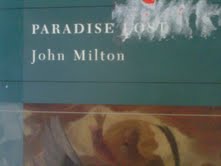
  • Your Reward: Eternal glory and the genuine thanks of millions of readers everywhere. Oh, and lots of cash, as you will doubtless become filthy rich in the
    Paradise Ruined by Another Cheap Label

    Paradise Ruined by Another Cheap Label

    process.

  • Signed: Maedez

Fuel for My Jetpack, Mead for My Dragon (02 February, 2012)

Having been a child of 1980’s cinema, I was exposed and became enamored of science-fiction movies with a good dose of action in them.  From the eye-popping SLAM!-BANG! of the early Star Wars saga to the bloody shootouts of Robocop, action sequences were the go-go juice that inspired my imagination whenever I sent my heroes on their perilous quests.  Just as fitting in fantasy as in sci-fi, pulse-pounding action sees us through classic scenes of knights battling dragons and elves battling orcs.

The task of putting an action sequence in your story can be tricky and frustrating.  Not being a visual medium, literary stories don’t have the advantage of simply showing the audience what’s happening; the reader must be told what’s going on.  As a lot of the excitement of action relies on a chain of events happening in quick succession, the risk emerges of losing the reader’s interest through wordy, overworked description.  Conversely, it’s kind of difficult to sell the heart-pounding suspense of “He swung his sword and almost chopped the other guy’s head off.”  The entire sequence can come off as a ‘You had to be there’ moment.

Fortunately, there are those out there who have experienced success in writing action.  I’ve done a little digging around and found some sound advice from around the Internet that may help with chronicling not just a battle, but an awesome battle.

One of the key elements of creating another world is populating it with unearthly creatures, the way-out nature of which could distract from the tone of the story. Storm The castle.com has a wise bit of advice about that featured in the piece, “How to Write a Great Combat Scene – Advice for Fantasy Writers”:

Handle Strange Creatures Realistically – When writing a creature into a combat scene, whether it be a Troll, Ogre, Goblin, Orc, or any other type of exotic fantasy creature, it still must follow the rules of flesh and blood. You probably don’t have a real fantasy creature to model combat motions after, but you will have a familiar creature that you can use as a template for motion. Fantasy creatures are almost always distortions of real creatures. Trolls become very large men, Goblins are wiry and quick, and Centaurs follow the template of horses. What you can do is to transfer your thinking about the creature in terms of what it is similar to. How would a horse move in this situation? How would a very large man move in this combat scene? These transferences of physique work well and make the combat realistic.

If you go check out the rest of the great tips listed (there are a number of them), remember to check out the other pages as well.  Storm the Castle has a treasure trove of fantasy-based craft projects and other goodies.

Elfwood.com is a massive collection of science-fiction and fantasy on the web.  Their stated goal to “provide a place for amateurs from all over the world to share, teach, and inspire a new generation of dreams” is backed up by their large library of stories and artwork, as well as the Fantasy Art Resource Project (FARP), an elaborate series of tutorials intended to aid the struggling visionary in the creative process.  In her article “Writing Action”, S. B. ‘Kinko’ Hulsey provides an excellent example of writing action by, in fact, providing an example of written action.  She starts with a rather drab, wordy piece of text and uses valuable tools to improve it.  A great piece of advice is to carefully choose one’s words, which can really make a difference in presenting action and keeping the play-by-play from getting boring.  Consider the following passage:

Janis leapt into the air, clearing the large, granite boulder without touching it with his plain, brown leather boots. He saw a glint of metal out of the corner of his eye and turned to see a huge ugly monstrosity of a troll swinging a large, engraved sword, made by dragons by the looks of it, at the boy. Jumping backwards, Janis avoided the sword and countered with his rapier, its strong, plain blade holding up to the strength of the beast.

Pretty clunky. But once it’s jazzed up with more arresting verbiage:

Janis leapt into the air, clearing the boulder easily. He caught a flash of metal out of the corner of his eye and whirled to see a huge troll swinging a sword straight at the boy. Leaping backwards, Janis avoided the blade, then countered with his rapier, its blade holding up to the strength of the beast.

… it becomes more interesting, and shorter to boot.  Brevity in an action sequence is important – and the article even says as much.  There’s much more inspiring information in the article, as well as the rest of elfwood.com.  Do yourself a favor and check it out.

Finally, what better place to learn about something than a site called about.com?  I’ve gone there many a time for other issues (everything from food safety to finding the right kind of freeware to do a project), and lo, they even have an entry about writing action, Ginny Wiehardt’s “How Do You Write Action Scenes?” One of the more soothing elements of the article is that it starts right off saying “Action scenes are really hard to write: it’s not just you.”  Good to know I’m not alone.

Get up and act out the scenes as best you can (though I realize this is not always possible when writing fantasy novels). As you act it out, you’ll also get ideas for other things you can describe. You might also try watching action sequences on screen (you could even observe or take a martial arts or fencing class). How do people tend to fall, on their sides, on their hands, etc.? What sorts of exclamations do they make? Do they wipe sweat away, or do they ignore it? How does a body respond when a sword (or hand, foot, etc.) makes contact?

Sage words. One of the keys to writing fantasy or science-fiction is to ground the world into some kind of reality.  This makes the characters and the situation relatable to the reader. I, for example, have never been to a high-tech park nestled in the jungle of a Central American island that saw bloodshed and disaster after the scientists that brought dinosaurs back to life lost control of the facility, but Michael Crichton provided plenty of effective descriptors of the action and the environments in Jurassic Park for me to relate to the danger the characters were in.

These were just a handful of search results.  Action writing can be a hassle, but it can also be a satisfying challenge met.  Never give up until you’ve created something that flows on the page as fast as it flows in your mind.

KMS

All of the quoted material is copyright their respective authors.

A Year in Books/Day 31: Ernest Hemingway A to Z

  • Ernest Hemingway in Milan, 1918

    Image via Wikipedia

    Title: Ernest Hemingway A to Z

  • Author: Charles M. Oliver
  • Year Published: 1999 (Checkmark Books)
  • Year Purchased: 2004/2005
  • Source: Unknown book seller, Upstate New York
  • About: Every knowable fact about Hemingway, contained in one large volume. With photographs.
  • Motivation: I’m of 3 or 4 minds about Hemingway the writer, and many more about Hemingway the man. However, since I write about dead writers, I knew this would be a useful reference tool. I also love-love!-any kind of encyclopedia.
  • Times Read: Cover-to-cover-1/as reference-countless
  • Random Excerpt/Page 348: “In criticizing her husband’s writing, Catherine Bourne says, in ‘The Garden of Eden’ , that a wastebasket is “the most important thing for a writer”. She later burns his stories and the reviews of his second novel in a wastebasket.”
  • Happiness Scale: 8