[Alternative Muses] Writerly Style: Daphne du Maurier

“Vain trifles as they seem, clothes have, as they say, more important offices than to merely keep us warm. They change our view of the world and the world’s view of us.”-Virginia Woolf, Orlando

It is difficult to avoid peddling clichés when discussing Daphne du Maurier’s personal style: there’s just something so vigorously English about her look.

Daphne du Maurier

Daphne du Maurier

See what I mean? Her fresh-scrubbed bluntness still bewitches. Whatever the truth of her routine, she looks like a woman whose morning ablutions consisted of plunging her face into a cold stream, followed by a haphazard spritz of rose-water, mirror-less application of the perfect red lipstick, and a few deep breaths. Whether she spent the day at her typewriter or traipsing through fragrant fields with clever dogs gamboling at her heels, it’s obvious that she was sartorially prepared.


Daphne du Maurier and family

Daphne du Maurier and family

Check out that tweedy magnificence! Doesn’t it make you want to throw out all fussiness from your wardrobe, peel away the unnecessary layers of routine, to streamline, distill, simplify? That is one powerfully chic, easy, wearable silhouette. A put-it-on-and-forget-about-it-yet-look-better-than-everyone-else type of ensemble.
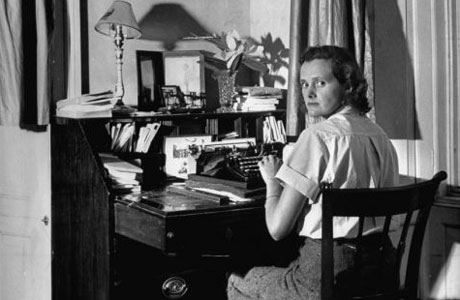
Daphne du Maurier at work

Daphne du Maurier at work

I don’t know many writers who look this crisply put together on the job, myself included. Yet, typewriter or no, she looks like a writer should look, doesn’t she? Serious, simply adorned, polished, comfortable. Ready to work, to create, to sweat it out, to answer an unexpected knock at the door without shame or a mad scramble for something suitable to wear. Every image of du Maurier seems to scream, “That, that was a woman who knew how to live.”

DAPHNE DU MAURIER (1907-1989)

SOME WORKS:

  • The Loving Spirit (1931)
  • Jamaica Inn (1936)
  • Rebecca (1938)
  • Frenchman’s Creek (1941)
  • Hungry Hill (1943)
  • My Cousin Rachel (1951)
  • Mary Anne (1954)
  • The Birds and Other Stories (1963)
  • Not After Midnight (1971)

“Writers should be read, but neither seen nor heard.”Daphne du Maurier

[Intermezzo] Lost Words

It’s a true story. I know how it ends, but I can’t move forward. The last twenty pages are as weighty as a boulder, as immovable as a broken vault door. My heart refuses to face the acrid, bloody truth, to acknowledge the twisted metal and shattered dreams. His unwritten novels poke through the years like torpid headlights in a fog. Am I a horrid person for lamenting the tragedy of lost words?

Daily Diversion #112: The Sun, the Bright Sun

Cityscape against a sunny sky, Easter afternoon

Cityscape against a sunny sky, Easter afternoon

“The sun–the bright sun, that brings back, not light alone, but new life, and hope, and freshness to man–burst upon the crowded city in clear and radiant glory. Through costly-coloured glass and paper-mended window, through cathedral dome and rotten crevice, it shed its equal ray.”-Charles Dickens, Oliver Twist

[A Small Press Life’s Irregular Index of Literary Facts] Debut Novels, Dead Writers Edition: Part One

Welcome to A Small Press Life’s Irregular Index of Literary Facts, a new feature designed to give lovely order to the random bookish trivia traveling around my brain. If you like lists, mental organization, random facts, or useless trivia about authors famous and obscure, you will definitely want to keep reading.

DEBUT NOVELS, DEAD WRITERS EDITION: PART ONE

The following books represent the first published novels of their respective authors, which were not always the first to be written. All novels are readily available in both traditional and e-reader versions.

  • Louisa May Alcott: Moods
  • Sherwood Anderson: Windy McPherson’s Son
  • Gertrude Atherton: What Dreams May Come
Gertrude Atherton

Gertrude Atherton

  • Jane Austen: Sense and Sensibility
  • James Baldwin: Go Tell it on the Mountain
  • Djuna Barnes: Ryder
  • Arna Bontemps: God Sends Sunday: A Novel
  • Elizabeth Bowen: The Hotel
  • Paul Bowles: The Sheltering Sky
  • Kay Boyle: Plagued by the Nightingale
  • Louis Bromfield: The Green Bay Tree
  • Anne Brontë: Agnes Grey
  • Charlotte Brontë: Jane Eyre
  • Emily Brontë: Wuthering Heights
  • Pearl S. Buck: East Wind: West Wind
  • Fanny Burney: Evelina: Or the History of a Young Lady’s Entrance into the World
  • James M. Cain: The Postman Always Rings Twice
  • Truman Capote: Other Voices, Other Rooms
  • Willa Cather: Alexander’s Bridge
  • Kate Chopin: At Fault
  • Agatha Christie: The Mysterious Affair at Styles
  • Colette: Claudine at School
  • Wilkie Collins: Antonina
  • Ivy Compton-Burnett: Dolores
  • Stephen Crane: Maggie: A Girl of the Streets
  • Philip K. Dick: Solar Lottery
  • Charles Dickens: The Pickwick Papers
  • Fyodor Dostoyevsky: Poor Folk
  • Theodore Dreiser: Sister Carrie
  • George Eliot: Adam Bede
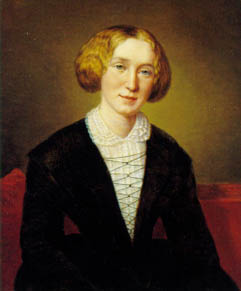
George Eliot

George Eliot

  • William Faulkner: Soldier’s Pay
  • F. Scott Fitzgerald: This Side of Paradise
  • Zelda Fitzgerald: Save Me the Waltz
  • Gustave Flaubert: Madame Bovary
  • Ford Madox Ford: The Shifting of the Fire
  • Zona Gale: Romance Island
  • Mrs. Elizabeth Gaskell: Mary Barton
  • Andre Gidé: The Notebooks of André Walter
  • Ellen Glasgow: The Descendant
  • Susan Glaspell: The Glory of the Conquered

A Quick Note to Jack Kerouac on His Birthday

Oh, Jean-Louis. You problematic, magnetic SOB. Ninety-one years to the day after your birth, and we-the writers, readers, and open souls of the world-still cannot escape your torturous orbit. As for me: my heart is willing, but my mind is not quite able to sprint the final few yards into your embrace. I promise to try again, like I always do. You know how it goes. It’s not you, it’s me. It’s not me, it’s you. It’s the two of us, together. I love you and hate you and love-hate-hate-love you. This dance we do will never end; the steps and the rhythm will change, but the tune will echo to eternity. Until next time.

Love and kisses and shrugs,

Maedez

On the Road

On the Road

“I was surprised, as always, by how easy the act of leaving was, and how good it felt. The world was suddenly rich with possibility.”-Jack Kerouac, On the Road