Algernon Charles Swinburne is Ready for His Close-Up

Algernon Charles Swinburne died on 10 April 1909. In addition to being ever-ready for a good close-up…

This slideshow requires JavaScript.

…he was quite an accomplished and well-rounded writer.

QUOTE: “For winter’s rains and ruins are over,/And all the season of snows and sins;/The days dividing lover and lover,/The light that loses, the night that wins.”

SOME WORKS: Mary Stuart; The Sisters; Atalanta in Calydon; Songs of Two Nations; A Century of Roundels; A Study of Shakespeare.

A KEEPSAKE:

A Swinburne Poetry Selection at Professor Booknoodle

A Swinburne Poetry Selection at Professor Booknoodle. $25.00


Pleasures Are Like Poppies Spread*: Counting Down to Our Burns Night Supper

This year, Burns Day/Night falls on a Friday. Every 25th January, The Chef and I host a big, crazy, slightly debauched, energetic, delicious Burns Supper. We live to entertain but are often impeded by our schedules, so when we throw down we do it in a big way. This event is the star of our calendar, and friends old and new come from near and far to enjoy the night with us. Who doesn’t enjoy a literary-themed shindig, one bursting with amazing food, Scotch, poetry, a toasting contest, music, laughter, conversation, spiffy ladies, and gents in kilts?

Since this party is book-related, I thought I would share with you some of the preparations that go into celebrating one of my favourite nights of the year, as well as the result. Does that sound like fun, or a great bore? I’m doing it either way, so I hope you will take a chance and join me on this raucous ride!

* “But pleasures are like poppies spread,/You seize the flow’r, its bloom is shed;/Or like the snow falls in the river,/A moment white-then melts forever;”-Robert Burns, Tam o’ Shanter

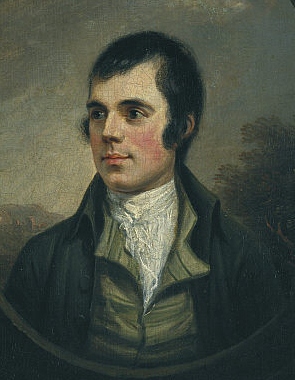
The man who inspires one helluva celebration.

The man who inspires one helluva celebration.

[News] Putting a Face to the Poet: Is This Emily Dickinson?

According to experts, the answer is yes. It’s only the second known image of the poet, and the first showing her as an adult. ‘Tis a big deal, no?                                                                                                                                                                  Still No New Pynchon Photo, but Here’s Emily Dickinson-The New York Times

Emily Dickinson gets a new look in recovered photograph-The Guardian


Women Writing for a Change ‘Spring Fling’ Podcast!

A few weeks ago, I participated in a podcast for Women Writing for a Change here in The Queen City. Although I was puffy and a bit out-of-sorts due to major sinus issues, the entire experience was several sorts of fun. My kilt-clad honey was there for moral support; the organizers even invited him into “the circle” (quite the important thing), where he unleashed his singular brand of brash, intellectual charm on all of my co-writer-readers. There followed nearly two hours of creative rituals, snacks, networking, laughter and, of course, podcast recording.

As host Carol Stewart said in her intro to the ‘Spring Fling’-themed podcast, we are “sending forth words that are bold and necessary”. Twelve writers offering twelve entirely different perspectives, a dozen voices ultimately uniting in a rising and triumphant exultation to the new season; there is stunning individuality but a cohesive flow is maintained. Written in ten minutes on a Sunday afternoon, with the only goal being to stave off boredom whilst maintaining a comfortable laziness, my contribution is brief and humble. It initially appeared here as Intermezzo: The Sky is Flaunting Itself. It’s quick but descriptive; after reading it twenty times I’m still content with it and am glad that I did not embellish it for this recording.

I am the third reader in the first segment. Be sure to check out my friend Angela Muchmore in the second segment, where she reads a lovely original poem. The podcast is available as a free download on iTunes. It can also be found on the WWFC web-site.

[News]-Poet Adrienne Rich is Dead

Award-winning poet Adrienne Rich is dead. She was 82.  More information can be found on The Rumpus or at the Los Angeles Times. I’d write more but I’m eager to curl up with some of her poems and a cup of tea. There is no better way to honor a writer’s memory than by reading their carefully crafted words.

“A thinking woman sleeps with monsters.”-Adrienne Rich

Poetic Grief, Revisited

My Great-Aunt Ginger died yesterday. It is my family’s time to mourn now, and so once more I turn to another writer’s words to express thoughts which refuse to be corralled by my own mind.

“It is a curious thing, the death of a loved one. We all know that our time in this world is limited, and that eventually all of us will end up underneath some sheet, never to wake up. And yet it is always a surprise when it happens to someone we know. It is like walking up the stairs to your bedroom in the dark, and thinking there is one more stair than there is. Your foot falls down, through the air, and there is a sickly moment of dark surprise as you try and readjust the way you thought of things.” -Lemony Snicket, ‘Horseradish:Bitter Truths You Can’t Avoid’.

Poetic Grief

My husband’s Aunt died today. After soothing his immediate grief, the first thing my mind turned to was poetry, death poetry: one of the three essential subjects of literature (and life), along with birth and love. Every poet that I can think of has touched on the theme, often numerous times. This is a piece by Rainer Maria Rilke, offered here as a lovely and sad filler whilst we deal with more pressing events.

‘On Hearing of a Death’ by Rainer Maria Rilke

We lack all knowledge of this parting. Death
does not deal with us. We have no reason
to show death admiration, love or hate;
his mask of feigned tragic lament gives us

a false impression. The world’s stage is still
filled with roles which we play. While we worry
that our performances may not please,
death also performs, although to no applause.

But as you left us, there broke upon this stage
a glimpse of reality, shown through the slight
opening through which you disappeared: green,
evergreen, bathed in sunlight, actual woods.

We keep on playing, still anxious, our difficult roles
declaiming, accompanied by matching gestures
as required. But your presence so suddenly
removed from our midst and from our play, at times

overcomes us like a sense of that other
reality: yours, that we are so overwhelmed
and play our actual lives instead of the performance,
forgetting altogether the applause.