Daily Diversion #17: Tongues in Trees*

Gentle giant

Gentle giant

I’m a city girl but I like my urban living with a side of greenery, please. I like to call it tree tourism. We visited this handsome fella and several of his friends last week. You cannot tell  from this photograph that the countryside is miles away. Hop in the car and three minutes later you are in the shadow of a different kind of titan, all concrete and steel and cold comeliness.

*”And this, our life, exempt from public haunt, finds tongues in trees, books in the running brooks, sermons in stones, and good in everything.”-William Shakespeare

A Year in Books/Day 160: My Blue Notebooks

  • Title: My Blue Notebooks The Intimate Journal of Paris’s Most Beautiful and Notorious Courtesan
  • Author: Liane de Pougy
  • Translation: Diana Athill
  • Year Published: This Edition: 2002 (Jeremy P. Tarcher/Putnam)
  • Year Purchased: 2003/2004
  • Source: Barnes & Noble clearance rack
  • About: Liane de Pougy ended her long life as a nun. A devout one, no doubt, whose circumstances bore little resemblance to the notorious escapades that made her name more than half a century earlier. She was a premiere good-time girl of the Belle Epoque . A Folies Bergere dancer who, in middle age, married a prince. She knew Proust, and was a vituperative frenemy of Colette. Her journals, which she kept between the ages of 50 and 72 (roughly the years corresponding to her marriage), are nearly as astounding as her life. Although journals are the most intimate of settings, there is always the temptation to gloss over the truth of personal shortcomings or weak moments with the mask of who you wish you were. The projection of a nobler, better self.  There can be no doubt that de Pougy was not entirely inclusive (who is?), yet the woman laid out in her journals is not always likable. She is haughty and self-important and a dozen other meaner things. As the heroine of her own life, she is indelibly grand-and unforgettable: passion, candour, wit, resilience, a genuine desire for self-improvement and intelligence are a few of her finer qualities. She is one of the most interesting women of the century.
  • Motivation: I love weird and controversial women. Those who go against the grain. Oddities. Survivors.
  • Times Read: 1
  • Random Excerpt/Page 47: “I have to admit that I’m up to my neck in frivolity, buried in dresses to the point of ruin! Fifteen different garments! My wardrobe jam-packed! My girl, this is not the way for an old woman to behave-particularly since you never wear anything but black and white, or a little grey, so you always look as though you were in the same dress. Why fritter away your money so absurdly?”
  • Happiness Scale: 8
    A postcard depicting Liane de Pougy.

    A postcard depicting Liane de Pougy. (Photo credit: Wikipedia)


[Intermezzo] Develop Monomania or Go Home!

Excuse me, but I’ve been holed up in the 19th century for the last few days. Time flies when your nose is in a book (or two). Close the cover and, wham, it is 2012 again. How did that happen? Where are the Shelleys, the Hunts, Keats, Byron? They were here just ten minutes ago. Their laughter hangs in the air, lilting and vaporous. I wish they had been able to stay longer; I enjoyed the discourse, the flinging of ideas, their beautiful and weighty words. Emily, too, slipped off when I wasn’t looking. She cannot be shackled, or fully understood. She is the elusive one. The great riddle. Why am I annoyed? They were selfish, demanding my time when it wasn’t healthy to give: develop monomania, or go home! was their request. It is always the same with them. Nothing ever changes. They aren’t very romantic-never were-but they are sirens, alluring as they lure you away from workaday life. They left, and do not linger. Out of the moment, through the fire, and I am not affected at all. I like it that way. Back in reality, refreshed, I can write again.

A Year in Books/Day 159: Emily Brontë

  • Title: The British Writers’ Lives Emily Brontë
  • Author: Robert Barnard
  • Year Published: 2000 (The British Library)
  • Year Purchased: 2012
  • Source: The Book Loft, Columbus, Ohio
  • About: I’m no Brontë virgin. There are many biographies of the famous literary family. I’ve read a lot of them, cut from various cloths. This entry in The British Library Writers’ Lives series is different from any of the others I’ve read. Focusing on middle daughter Emily (she of Wuthering Heights), it completes the feat of being a wonderful introduction to first-timers while bringing something new to the party for veterans. It is steady and insightful without ever resorting to the wild-child mystic trope that has followed Emily’s ghost around for decades. This biography is packed with original photographs, drawings, manuscripts, artwork and letters, which lend it a vivid immediacy that longer works often lack. It is a quick, quick read that you will want to return to time and again.
  • Motivation: I bought this volume to continue my love affair with dead writers and classic literature.
  • Times Read: 1
  • Random Excerpt/Page 38: “There is a touch of cracker-barrel philosopher about this, as if Emily is only happy dealing with strong personal emotion when she can don a Gondal mask as a partial cover for her feelings. Confessional poetry was never to be her forte.”
  • Happiness Scale: 10

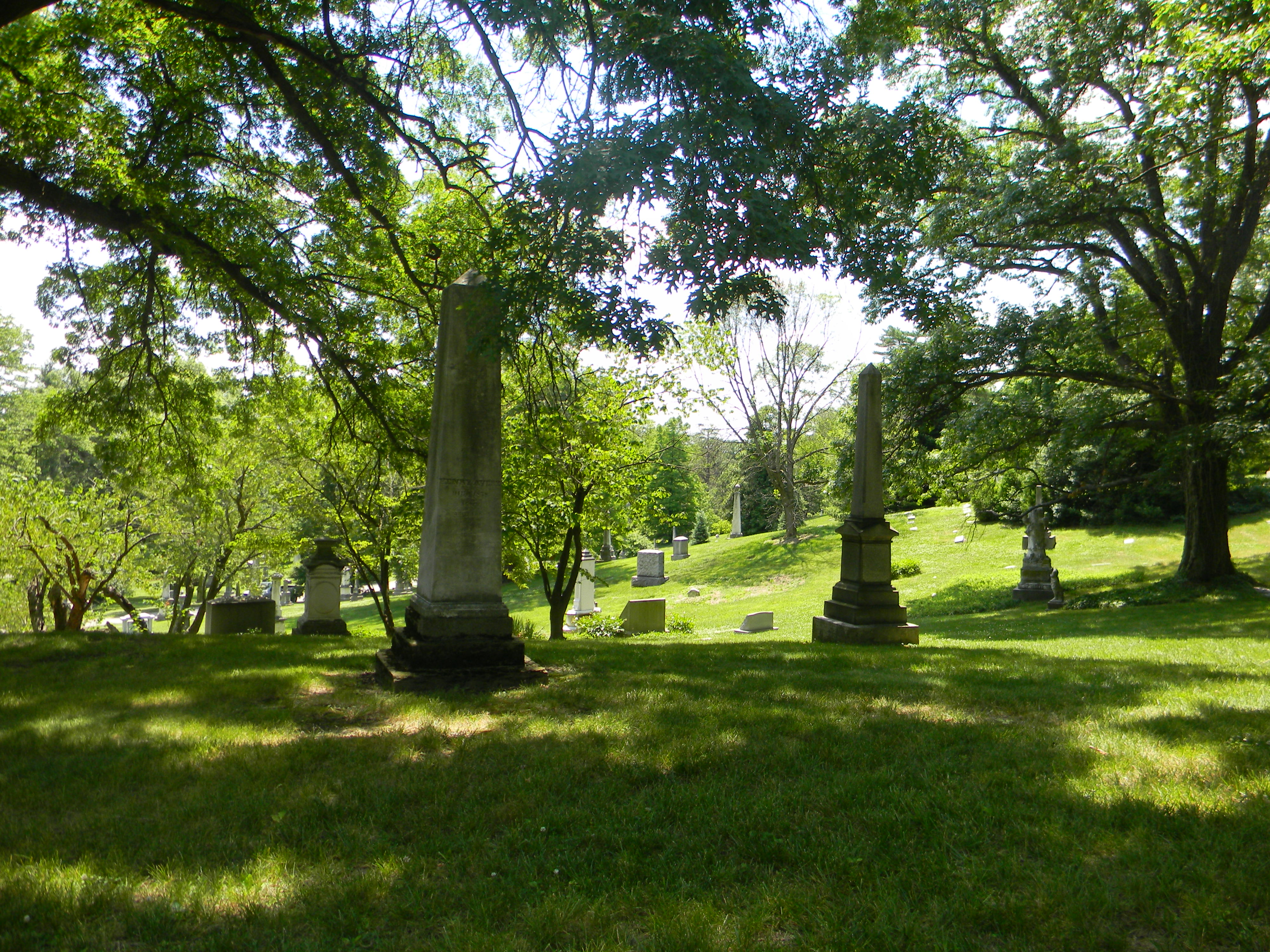
Daily Diversion #16: Summer Transiency*

A sun-dappled view

A sun-dappled view among the shades

The views from the graveyard go on forever; they cross steep hills, tumble into valleys, and cross a breathtaking expanse of sky, all the while skipping across centuries. A sense of peace echoes about the place, and follows you wherever you look. Close your eyes, and it is still there. Tumult is absent. It is okay to step softly across the sod, and smile.

*”He loved, beneath all this summer transiency, to feel the earth’s spine beneath him.”-Virginia Woolf, Orlando


A Year in Books/Day 158: Bloomsbury Recalled

  • Title: Bloomsbury Recalled
  • Author: Quentin Bell
  • Year Published: 1995 (Columbia University Press)
  • Year Purchased: 2002/2003
  • Source: Unknown
  • About: The author was the younger son of Vanessa and Clive Bell, two central figures in the Bloomsbury group (which was really just a loose network of friends, family and acquaintances). His aunt was, of course, novelist Virginia Woolf. Bloomsbury Recalled is his brief but excellently engaging memoir of the fascinating adults who formed his parents’ social and professional circles from WWI to the start of the next  great international conflict at the end of the 1930s. The little boy who grew up in a sticky web of conflicting personalities and crossed goals became an accomplished polymath with a distinctive, intelligent and highly amusing voice. His relaxed nature, probing wit and compelling birthright give this book a sparkle that the average Bloomsbury retrospective sorely lacks.
  • Motivation: Bloomsbury? Check. A relatively unbiased insider’s view? Check. Writers, artists and theorists? Oh my! Seriously, this book covers one of my favourite literary periods. That is reason enough.

    English: Portrait of Clive Bell

    English: Portrait of Clive Bell (Photo credit: Wikipedia). The author’s father.

  • Times Read: 3
  • Random Excerpt/Pages 11 & 12 : “I was not alarmed. I was convinced that I was not really consumptive; also, apart from the cough and high temperature, I did not feel at all ill. I enjoyed some fierce arguments with a clergyman, managed to do a little painting, and embarked upon historical research on the principality of Monaco for which I was totally unqualified.”
  • Happiness Scale: 10

A Year in Books/Day 157: Selected Poems & Letters of Emily Dickinson

  • Title: Selected Poems & Letters of Emily Dickinson
  • Editor: Robert N. Linscott
  • Year Published: First edition:1959/This edition: ???? (An Anchor Book)
  • Year Purchased: 2001/2002
  • Source: This was a hand-me-down from a long-time friend.
  • About: If Emily Dickinson was alive and writing today, she would probably blog her poetry under a pseudonym. Since she was born in 1830, she composed reams of golden verse and hoarded them away in dark bureau corners. After she confined herself to home-a situation that was gradual, and not a fierce, sudden statement-she kept up with the outside world via the epistolary arts. Letters make the best (auto)biographies. They are a time capsule, a locus for self-mythology and the only genuine source of a person’s thoughts, feelings and actual opinions. For these reasons, I have long loved volumes with the chutzpah and heart (not to mention access to original material) to combine professional output with personal words. This book is a winner all around.
  • Motivation: Emily Dickinson is one of my preferred poets. Neruda is always and ever in the top spot, but she holds a place of honour in the court.
  • Times Read: Cover-to-cover:2/Random poems: countless
  • Random Excerpt/Page 288: “You wonder why I write so. Because I cannot help. I like to have you know some care-so when your life gets faint for its other life, you can lean on us. We won’t break, Mary. We look very small, but the reed can carry weight.”
  • Happiness Scale: 10+++
    Emily Dickinson

    Ubiquitous Emily Dickinson photo (Photo credit: Wikipedia)