Unknown's avatar

About maedez

Writer, biographer, poet. History nerd, silent movie maven. Punk rocker, amateur baker, bookworm. Cricket fan, Scotch drinker, craft beer snob.

A Year in Books/Day 120: Cannes

  • Title: Cannes Fifty Years of Sun, Sex & Celluloid
  • By: The Editors of Variety
  • Year Published: 1997 (Variety, Inc./Miramax Books/Hyperion)
  • Year Purchased: 2000?
  • Source: Barnes & Noble clearance rack
  • About: The Cannes Film Festival is as much about the shenanigans of the beautiful movie stars as it is about the actual films vying for the prizes. Or, at least it was. In recent years (decades?) the whole enterprise seems stale and tepid. You have to go back to the 1950s and 1960s  to find the truly interesting stories and dazzlingly cheesy stunts. This thin volume, covering the first five decades of the festival, gives readers a light-hearted, conspiratorial look behind the scenes. The photos are exceptional.
  • Motivation: Film buff and writer in the house.
  • Times Read: 2
  • Random Excerpt/Page 19: “Ironically, Cannes was not created for the film buff at all, but to lure attention away from Venice, the granddaddy of all film festivals, as well as to increase tourism, image and the sheer gloire of the host country, ever a fervent combatant for culture. (Not coincidentally, the Cannes festival jury was all-French until 1952, when some carefully screened outsiders were admitted.)
  • Happiness Scale: 7 1/2

A Year in Books/Day 119: I Care About Your Happiness

  • Title: I Care About Your Happiness Quotations from the Love Letters of Kahlil Gibran and Mary Haskell
  • Selected by: Susan Polis Schutz
  • Year Published: Seventh Printing-February 1979 (Blue Mountain Press)
  • Year Purchased: I have no idea. This is a hand-me-down book from my mom.
  • Source: My mom
  • About: Kahlil Gibran and Mary Haskell lived at a time when communication was more meaningful and deliberate. Their love letters are intense and a bit flowery (as was typical of that period) and beautifully unrestrained. The intervening century has not dimmed their effectiveness.
  • Motivation: I read everything I could get my hands on when I was growing up. This first made its way into my hands when I was 10 or 11. When I moved out as a young adult, it *accidentally* came with me. Ahem. It was well worth it, though, as one of Gibran’s poems was incorporated into my wedding vows in 2010.
  • Times Read: Countless
  • Random Excerpt/Page 30: “What difference does it make, whether you live in a big city or in a community of homes? The real life is within.”
  • Happiness Scale: An unabashed, soppy, sentimental 10

Inspiration Strikes…in the Strangest Places

The women in my family have a saying. At least four generations have been caught up by the idea, so it’s definitely a thing. “Warm, sudsy water cures all”. Yep, this is whipped out any time someone has a headache, the ‘flu, is in the throes of grief–or when there are dishes to be done. Especially that last one. (This is 2012, so the men aren’t immune from being roped into doing the after-meal washing up, either.) It’s often thrown around with more than a bit of sarcasm by the conscripted scrubbers; yet, when I think about it, there’s more than a bit of truth contained beneath the ruse. Continue reading

A Year in Books/Day 118: The Garden Party and Other Stories

  • Title: The Garden Party and Other Stories
  • Author: Katherine Mansfield
  • Year Published: 1922/This Edition: 1997 (Constable & Co./Penguin Books)
  • Year Purchased: 2003/2004
  • Source: Unknown
  • About: It’s almost enough to state that “Katherine Mansfield wrote short stories. The end.” It’s fitting that the genre she helped make a singularly modern medium was, largely, her only medium. If you require action (fast-paced or otherwise) from your fiction, then her quiet, introspective, internal and often plotless stories aren’t for you. The book is just long enough to help pass a lonely afternoon; its perhaps best read with a cup of tea to hand and feet up, on a languorously rainy Saturday. You probably won’t walk away any happier, but you’ll be richer for the experience.
  • Motivation: I’m that rarest of creatures: a fiction writer with no real ambition to write the Great American Novel-or any novel. Short stories are my talent’s natural home. Katherine Mansfield should be respected by any writer of short fiction.
  • Times Read: 2
  • Random Excerpt/Page 114: “On her way home she usually bought a slice of honey-cake at the baker’s. It was her Sunday treat. Sometimes there was an almond in her slice, sometimes not. It made a great difference. If there was an almond it was like carrying home a tiny present-a surprise-something that might very well not have been there. She hurried on the almond Sundays and struck the match for the kettle in quite a dashing way.”
  • Happiness Scale: 9
    Alumna, Katherine Mansfield

    Katherine Mansfield (Photo credit: Wikipedia)


A Year in Books/Day 117: Miss Cranston’s Omnibus

  • Title: Miss Cranston’s Omnibus
  • Author: Anna Blair
  • Year Published: 1998 (Shepheard-Walwyn (Publishers) Ltd. for LOMOND BOOKS)
  • Year Purchased: 2002/2003
  • Source: Unknown
  • About: What is it about old folks reminiscing that cuts straight to the bone, brain and heart? Is it because there’s no excess of thought, no emotional grandstanding? There’s a realness that remains-sometimes raw and sorrowful, sometimes light and joyous-but no heaviness. Whatever it is, it’s on stunning display in Miss Cranston’s Omnibus. Author Anna Blair interviewed hundreds of aging Glaswegians about their lifestyles and experiences during the first half of the twentieth century. She wove that material into a larger historical narrative, allowing for as true and clear a picture of the place and time as we’ll ever have. This edition is comprised of two earlier volumes (Tea at Miss Cranston’s and More Tea at Miss Cranston’s), originally published in 1985 and 1991.

    drawing, poster design for Miss Cranston's Tea...

    drawing, poster design for Miss Cranston's Tearooms. (Photo credit: Wikipedia)

  • Motivation: Glasgow! History! Nostalgic old people!
  • Times Read: 1
  • Random Excerpt/Page 11: “The photographer of the 1880s swoops under his dark velvet cloth and snaps his fingers at the family group. Breaths are held and, as the cliche says, a moment in time is captured for ever, and with it an array of that era’s fashion from infants’ to grandparents’. Repeat the process every decade and you have a century of change from bonnet to Princess of Wales’ feather, button boot to pink sneaker. Well…You’d have the gamut right enough, as far as the bien-provided were concerned, but for much of that hundred years there was a broad swathe of Glasgow folk a world away from wool and velvet and starched pinafores.”
  • Happiness Scale: 8

A Year in Books/Day 116: The Thin Man

  • Title: The Thin Man
  • Author: Dashiell Hammett
  • Year Published: 1933/This Edition: 1989 (Alfred A. Knopf/Vintage Books Edition)
  • Year Purchased: 1990
  • Source: Doubleday Book Shops
  • About: Oh, Hammett. Hammett. Dashiell Hammett. I had such a teenage crush on you. This book, right here, this exact volume, started it all. This is where phrases like ‘hard-boiled’ and ‘tough as nails’ usually come into play. His characters are certainly that, but Nick and Nora Charles are so much more besides: sly, witty, elegant, sophisticated, sexy, bewitching. His prose is streamlined, sleek, purposeful, entertaining; as you would expect from a good crime story, there is not one unnecessary word or action to be found. He was a master of dialogue, real-world, genuine, fresh dialogue. Hammett was a very fine writer-and not just for a detective novelist. The Thin Man is a quick read in the best sense: it’s intelligent and fast-paced, with a smart plot and interesting characters. He knew how to hook you and, just as importantly, he knew when to let you go.
  • Motivation: The 1934 film version. I like to read books before seeing film adaptations but I was introduced to The Thin Man in reverse order; I caught it on television when I was 14 or 15. Instant love, of course. Who can resist William Powell and Myrna Loy? No one I’ve ever met.
  • Times Read: 4 or 5
  • Random Excerpt/Page 12: “That afternoon I took Asta for a walk, explained to two people that she was a Schnauzer and not a cross between a Scottie and an Irish terrier, stopped at Jim’s for a couple of drinks, ran into Larry Crowley, and brought him back to the Normandie with me. Nora was pouring cocktails for the Quinns, Margot Innes, a man whose name I did not catch, and Dorothy Wynant. Dorothy said she wanted to talk to me, so we carried our cocktails into the bedroom.”
  • Happiness Scale: 10
    Dashiell Hammett (1894-1961)

    Dashiell Hammett, teen idol (1894-1961). (Photo credit: Wikipedia)


A Year in Books/Day 115: James Williamson Studies and Documents of a Pioneer of the Film Narrative

  • Title: James Williamson Studies and Documents of a Pioneer of the Film Narrative
  • Author: Martin Sopocy
  • Year Published: 1998 (Associated University Presses, Inc.)
  • Year Purchased: 2002
  • Source: Unknown
  • About: Be warned: This book is so dry and bland that you could crumble it up and toss it in a bowl of soup. It’s so slow-paced that I had to put it away and pick it up again a few months later. Twice. That was a new experience for me, as I relish slogging through even the most dry-toast academic volumes. To have that happen with a book on silent film was almost unbearably disappointing. Yet, it is significant in its way: it’s a book about English filmmaker James Williamson; it offers painstakingly detailed breakdowns of films long since lost; the photographs and images of slides are of critical importance to film history.
  • Motivation: I have a sizable library of books on silent cinema. Since I write extensively on the subject, I’m always eager and excited to add a new volume (this book is possibly the only time I have been disappointed) to my collection.
  • Times Read: 1 (barely)
  • Random Excerpt/Page 61: “An overall view of the history of the film narrative could tempt us to suppose that motion photography, that cinema itself, has an inherent affinity with realism. Yet in actual practice such an affinity exists only to the extent that the filmmaker rejects the camera’s capacity for illusion and uses it instead with the conscious purpose of recording the world around him as he sees it, and the incidents within that world that have actually happened or could plausibly happen.”
  • Happiness Scale: 5

The Dead Writers Round-Up: 27th April

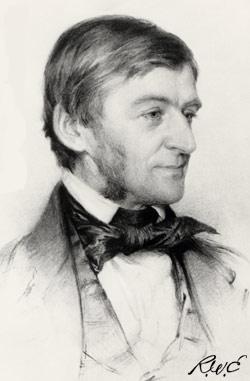
  • Ralph Waldo Emerson died on 4/27/1882.
Ralph Waldo Emerson

Ralph Waldo Emerson

“A chief event of life is the day in which we have encountered a mind that startled us.”

  • Hart Crane died on 4/27/1932.  “One must be drenched in words, literally soaked in them, to have the right ones form themselves into the proper pattern at the right moment.”

A Year in Books/Day 115: Pompeii The Living City

  • Title: Pompeii The Living City
  • Authors: Alex Butterworth and Ray Laurence
  • Year Published: 2005 (St. Martin’s Press)
  • Year Purchased: 2005
  • Source: History Book Club
  • About: History should be a living, breathing, laughing, squirming thing. Alive, thought-provoking, uncomfortable, enlightening. Not boring or stilted. When presented in book form, you shouldn’t want to skip ahead to find the good bits; it should all be good bits. Fortunately, Butterworth and Laurence agree. Their Pompeii The Living City is as vivid, varied and fast-paced as the subject itself. The result is an indelibly engaging volume that pulls on your senses until it feels-almost, if only in the back of the mind-like a real-time experience.
  • Motivation: I’ve loved ancient history since I was a kid and dreamed big dreams of being an anthropologist or archaeologist when I grew up. Well, kind of; I never seriously wanted to do anything but write. Kid me envisioned the anthropologist/archaeologist thing as kind of a side-line or hobby. Ah, youth!
  • Times Read: 1
  • Random Excerpt/Page 130: “In all respects, the beauty industry was big business in Pompeii. Affluent women struggled to emulate the idealised femininity of the frescoes on their walls, who stared into polished bronze or silver mirrors with justified self-regard, their dressing tables bare of any artificial means of enhancement. Yet the great range of ingeniously wrought bottles that have been found testifies to the lengths to which some women in the real world would go to preserve or improve their looks.”
  • Happiness Scale: 9
    House of the Faun in Pompeii, Italy

    House of the Faun in Pompeii, Italy (Photo credit: Wikipedia)